
The Silence of God
Few experiences in the spiritual life feel more unsettling than the silence of God.
There are seasons when prayer changes in ways we do not expect. What once felt warm becomes quiet. What once felt emotionally vivid becomes still. The sense of God’s nearness, which may have once felt immediate or tangible, seems to recede into silence. And naturally, the question rises: Where has God gone?
It is an honest question. A deeply human one. Many of us unconsciously associate God’s presence with emotional reassurance—with warmth in prayer, interior peace, spiritual sweetness, or a felt sense of closeness. So when those experiences begin to fade, it becomes very easy to assume something is wrong. Perhaps we are failing spiritually. Perhaps we are praying incorrectly. Perhaps God has become distant.
But Christian spiritual tradition offers a far more profound—and far more tender—interpretation.
God’s silence is not necessarily His absence.
In fact, some of the deepest voices in the Christian mystical tradition would suggest that spiritual silence is often not abandonment at all. It is purification.
That distinction changes everything.
Because mature faith is not the same thing as emotional consolation. Love that depends entirely on feeling has not yet learned how to remain. That may sound uncomfortable, but it is also deeply freeing. Because if God’s presence depended entirely on our emotional experience, then faith would become fragile, contingent, and deeply unstable. But the spiritual life is not built on emotional intensity. It is built on fidelity.
This is why Scripture so often presents God not in spectacle, but in subtlety. In 1 Kings 19, Elijah encounters wind, earthquake, and fire—but God is not found in any of them. Instead: “After the fire came a gentle whisper.” What a profound image. Because we often expect God to arrive dramatically—through unmistakable feeling, overwhelming clarity, or emotional certainty. But divine presence is often much quieter than that. Sometimes so quiet, in fact, that it feels almost like silence. And if we do not understand that, we may mistake stillness for absence.
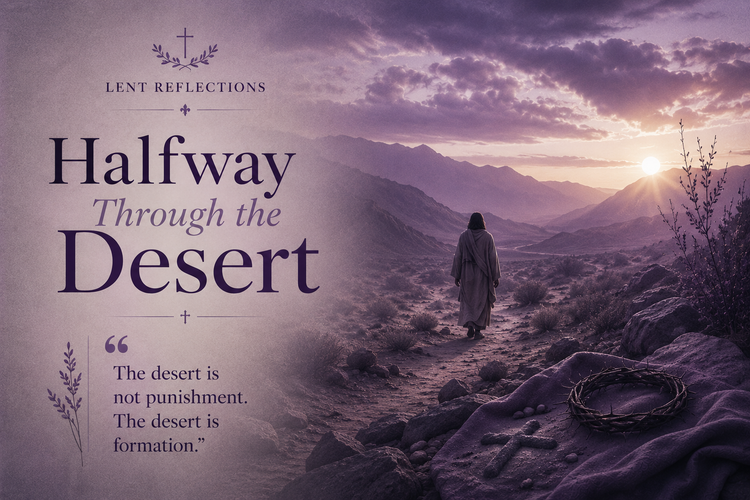
Lent naturally creates the conditions where this misunderstanding can surface. As distractions fall away, the soul enters what many spiritual writers would call an interior desert—not a geographic desert, but a spiritual one. A place where external noise loses urgency and internal reality becomes harder to avoid. Attachments surface. Anxieties become visible. The restless need for reassurance becomes harder to ignore. And prayer, instead of feeling emotionally comforting, may suddenly feel dry.
But dryness is not necessarily distance.
Sometimes dryness is revelation.
Because when emotional consolations become quieter, we begin to see what we were unconsciously leaning on. That can feel deeply exposing. And exposure is rarely comfortable.
This is where Saint John of the Cross becomes profoundly helpful. His language of the Dark Night of the Soul is often misunderstood, but at its heart, it describes a deeply spiritual purification—not punishment, not divine rejection, not emotional collapse. Purification. Detachment. The maturation of love.
In the earlier stages of spiritual life, God often permits sweetness in prayer. Consolation can help awaken desire, tenderness, devotion, and trust. But mature love cannot remain dependent on emotional reward. And so sometimes, in His mysterious mercy, God allows those emotional consolations to quiet—not because He has abandoned the soul, but because He is teaching it something deeper: how to love Him for Himself, not for what prayer feels like.
That is a radically different kind of relationship.
And honestly, a much more mature one.
Because consolation is not the same thing as communion.
That distinction matters. You can feel spiritually emotional and not actually be deeply surrendered. And you can feel spiritually dry while remaining profoundly close to God. Those are not contradictions. They are part of spiritual maturation.
Saint Mother Teresa offers one of the most modern and moving witnesses to this mystery. For years—far longer than many people realize—she experienced profound interior dryness and a painful sense of God’s silence. And yet she remained. She prayed. She served. She loved Christ. She persevered.
That witness is extraordinary because it reminds us that faith is not emotional dependency.
Faith is fidelity.
Faith says: Even if I do not feel You the way I once did, I will remain.
That is not coldness.
That is love.
This is also where spiritual warfare can become particularly subtle. Because when emotional consolation disappears, discouragement can creep in. Self-doubt can rise. Spiritual performance anxiety can emerge. The temptation becomes immediate: maybe I should stop praying. Maybe I am doing this wrong. Maybe God has left. Maybe none of this is real.
And sometimes the more tempting response is not abandonment, but stimulation. Noise instead of stillness. Distraction instead of quiet. Anything that helps us avoid the discomfort of spiritual silence.
But what if silence itself is the place of formation?
What if what feels like hiddenness is actually intimacy without sensation?
That is a deeply uncomfortable thought—but also a profoundly transformative one. Because it forces a very honest spiritual question:
Do I seek God… or the feeling of God?
That question can expose much more than we expect. Because many of us genuinely love God, and yet may still be more attached to emotional reassurance than we realize. But faith beyond feeling is not lesser faith. It may actually be deeper faith—the kind that stays, the kind that kneels in quiet, the kind that remains when emotional sweetness fades, the kind that trusts beneath sensation.
Perhaps that is why silence in prayer can become one of the most mysterious gifts in spiritual life. Not because silence feels pleasant, but because silence purifies love. It strips dependency. It deepens surrender. It teaches the soul to remain.
So no—the silence of God is not always empty.
Sometimes it is where deeper communion begins.
Sometimes what feels like absence is actually transformation.
And perhaps one of the most comforting truths of all is this:
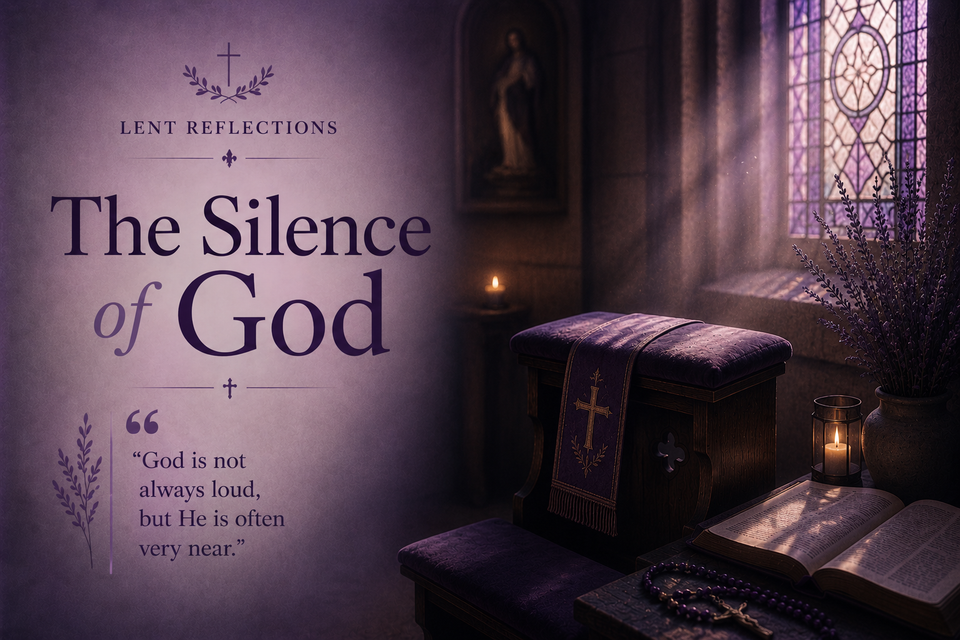
God is not always loud, but He is often very near.
If You Want to Sit With This Reflection
- 1 Kings 19:12 — Elijah and the gentle whisper
- Psalm 46:10 — Be still and know
- Saint John of the Cross — Dark Night of the Soul
- Saint Mother Teresa — Fidelity in spiritual dryness
Some reflections feel different when they’re heard.

Member discussion